The Factory
The Factory
The Factory
The production environment at Pandemic Design Studio was never built from a predetermined plan. It evolved alongside the ceramic collections, with each new stage of production revealing opportunities for refinement and expansion.
The result is a purpose-built production ecosystem where products, production systems, workstations, machinery, and infrastructure have evolved together over time, continuously informing one another to create a manufacturing environment shaped by the same design thinking found throughout the studio's work.
The production environment at Pandemic Design Studio was never built from a predetermined plan. It evolved alongside the ceramic collections, with each new stage of production revealing opportunities for refinement and expansion.
The result is a purpose-built production ecosystem where products, production systems, workstations, machinery, and infrastructure have evolved together over time, continuously informing one another to create a manufacturing environment shaped by the same design thinking found throughout the studio's work.
The Production Ecosystem
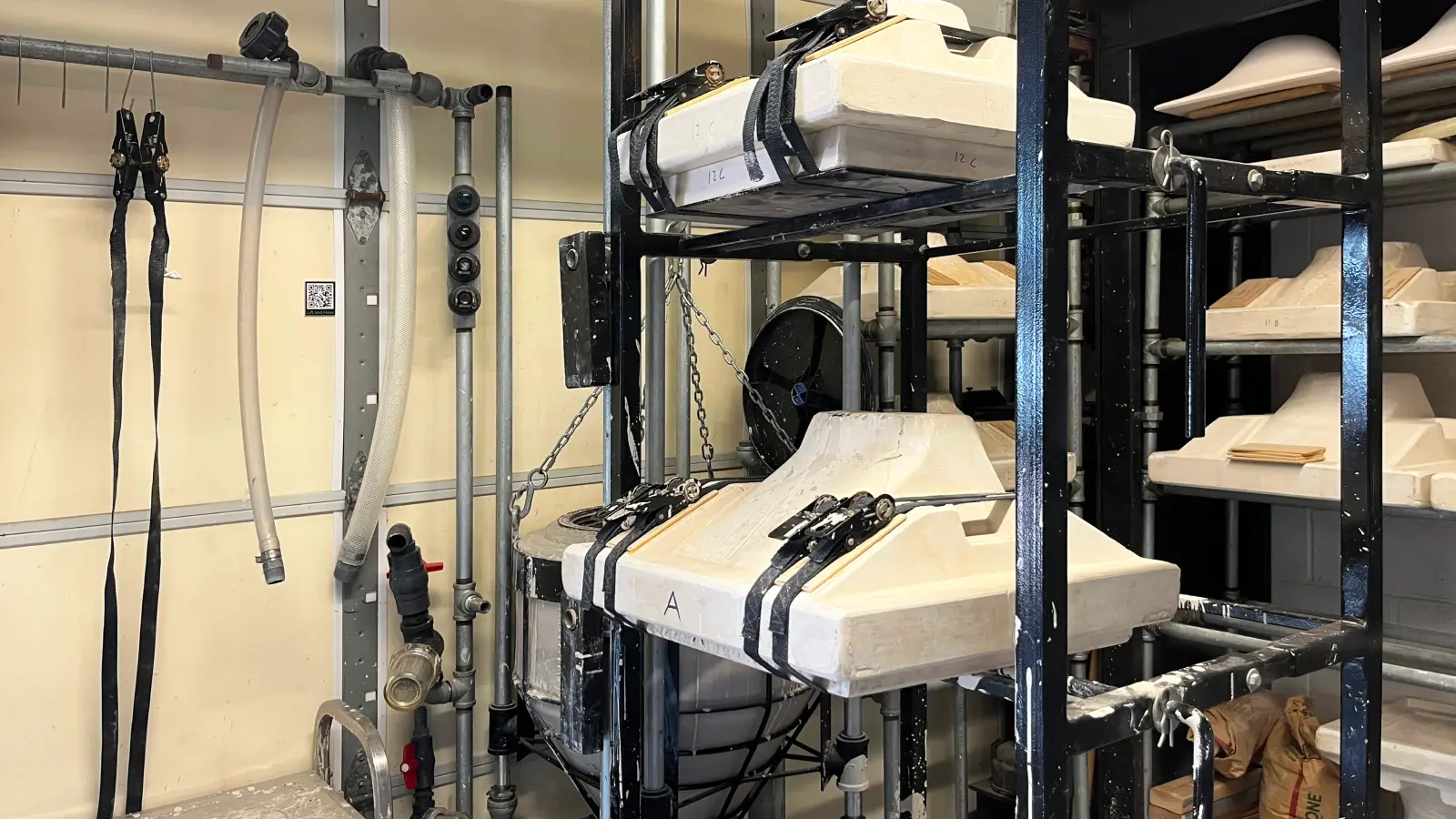
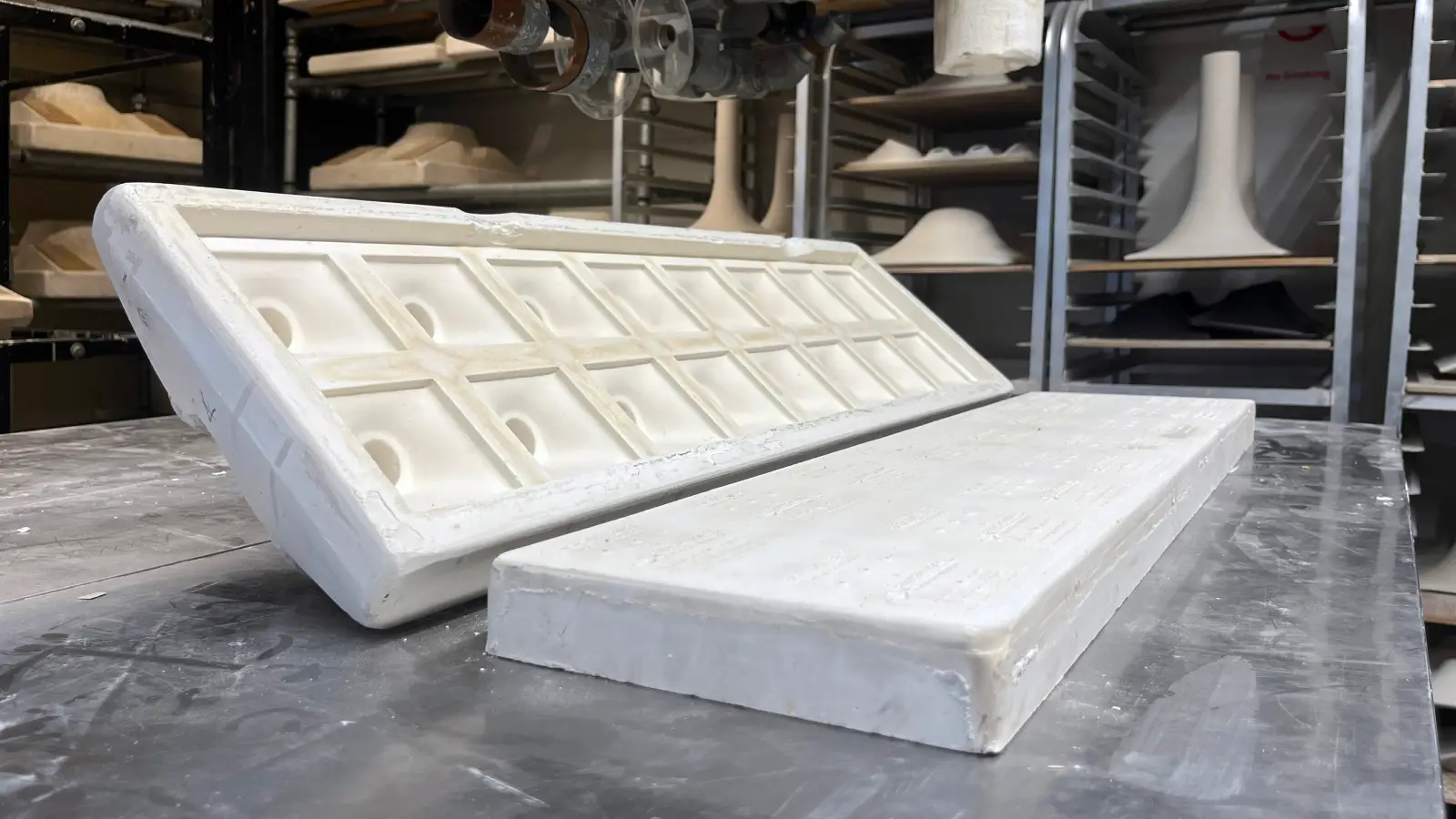
During the initial design of The Node, it wasn't immediately apparent that its geometry would also influence the way it could be manufactured. Unlike most ceramic molds, the geometry of the Node allowed the plaster mold to separate vertically rather than horizontally. That characteristic made it possible to combine multiple molds into a single gang mold capable of producing numerous castings simultaneously while reducing the quantity of molds to manage and maintain.
The gang molds created an opportunity to rethink production itself. Organizing casting vertically concentrated manufacturing into a remarkably compact area while dramatically increasing output. Pandemic Design Studio designed custom Casting Towers capable of operating multiple gang molds simultaneously, creating the foundation for an entirely new casting system.
During the initial design of The Node, it wasn't immediately apparent that its geometry would also influence the way it could be manufactured. Unlike most ceramic molds, the geometry of the Node allowed the plaster mold to separate vertically rather than horizontally. That characteristic made it possible to combine multiple molds into a single gang mold capable of producing numerous castings simultaneously while reducing the quantity of molds to manage and maintain.
The gang molds created an opportunity to rethink production itself. Organizing casting vertically concentrated manufacturing into a remarkably compact area while dramatically increasing output. Pandemic Design Studio designed custom Casting Towers capable of operating multiple gang molds simultaneously, creating the foundation for an entirely new casting system.
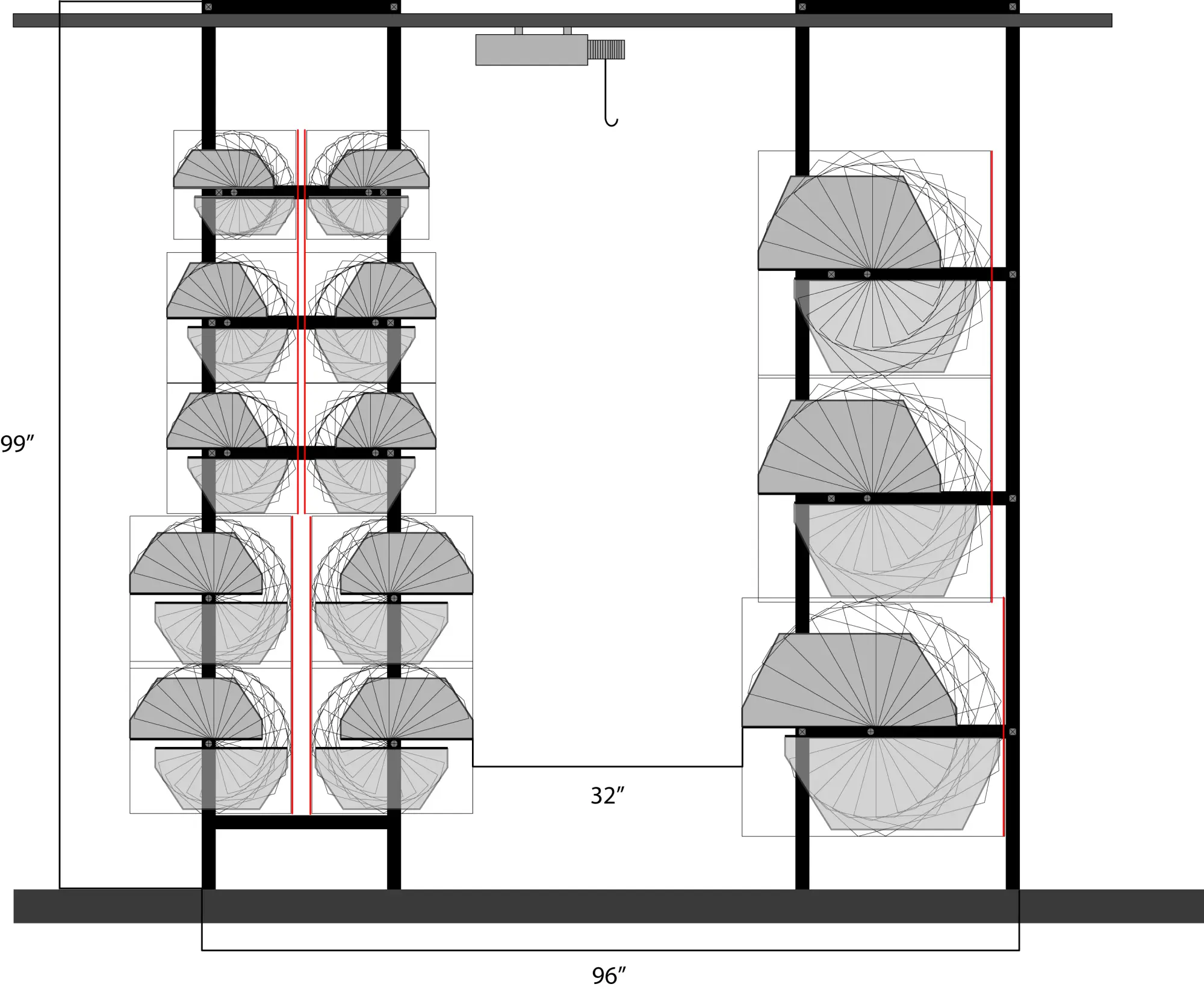
Diagram of the Casting Towers
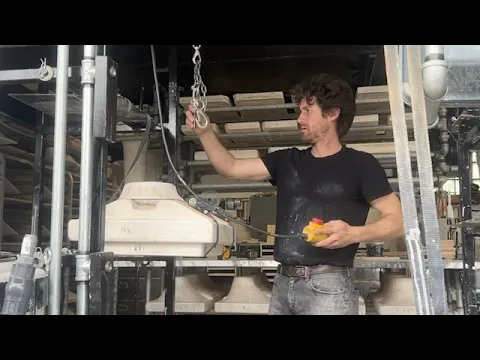
Since the gang molds were too large and heavy to comfortably move manually over extended amounts of time, overhead tracks and movable hoists were integrated into the towers, allowing molds to be raised, lowered, and transferred with precision while reducing the physical demands of repeated casting. As production continued to grow, the Slip Lift became the next logical evolution, increasing the speed and consistency of filling molds while integrating directly into the casting workflow.
No machine was conceived as a standalone invention. Each was a direct response to the manufacturing opportunities created by the products themselves.
Since the gang molds were too large and heavy to comfortably move manually over extended amounts of time, overhead tracks and movable hoists were integrated into the towers, allowing molds to be raised, lowered, and transferred with precision while reducing the physical demands of repeated casting. As production continued to grow, the Slip Lift became the next logical evolution, increasing the speed and consistency of filling molds while integrating directly into the casting workflow.
No machine was conceived as a standalone invention. Each was a direct response to the manufacturing opportunities created by the products themselves.
A Compact Footprint
A Compact Footprint
A Compact Footprint
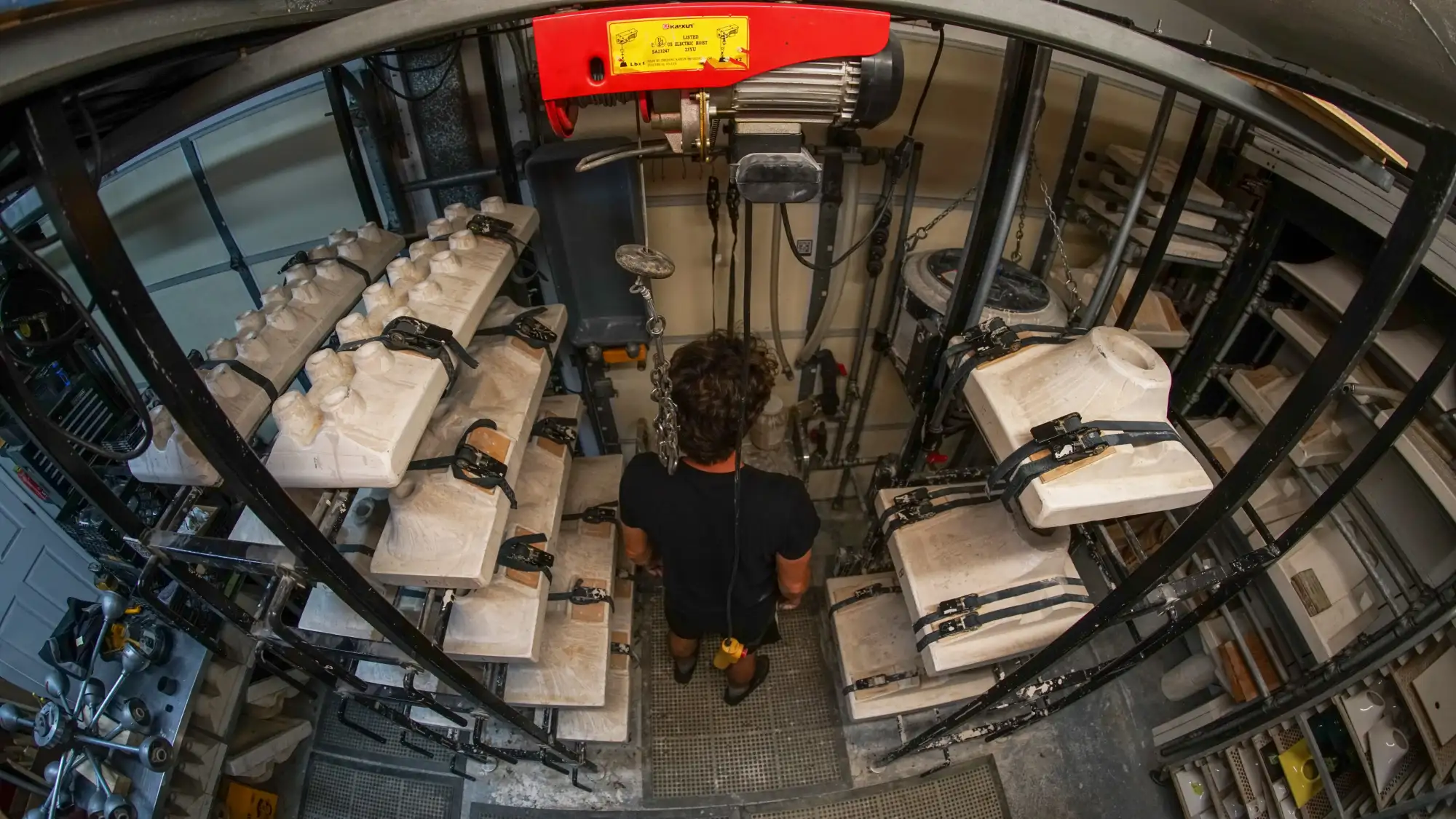
At the heart of the production ecosystem is a dedicated casting zone occupying approximately 10' × 10'.
Within this compact footprint, the Casting Towers, overhead hoists, and Slip Lift operate as a single integrated system capable of producing more than sixty ceramic forms in a single casting cycle.
At the heart of the production ecosystem is a dedicated casting zone occupying approximately 10' × 10'.
Within this compact footprint, the Casting Towers, overhead hoists, and Slip Lift operate as a single integrated system capable of producing more than sixty ceramic forms in a single casting cycle.
The goal was never to build a larger factory. It was to build a denser one—where every square foot and every cubic foot contribute to production.
Every dimension within the casting zone reflects the realities of daily production and space maximization. The width of each gang mold was determined by the maximum comfortable reach of a single operator, balancing production capacity with the physical realities of repeated use.
The goal was never to build a larger factory. It was to build a denser one—where every square foot and every cubic foot contribute to production.
Every dimension within the casting zone reflects the realities of daily production and space maximization. The width of each gang mold was determined by the maximum comfortable reach of a single operator, balancing production capacity with the physical realities of repeated use.
Production Through Invention
Production Through Invention
Production Through Invention
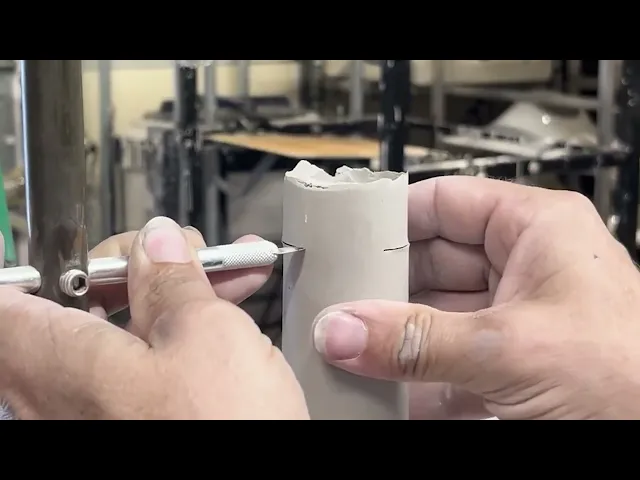
As production capacity increased, attention shifted toward refining individual operations. Pandemic Design Studio began designing purpose-built custom tools that improved consistency, precision, and efficiency at specific stages of production. From the beveler to the vase cutter, each invention reflects the same process of careful observation and incremental refinement found throughout the studio.
As production capacity increased, attention shifted toward refining individual operations. Pandemic Design Studio began designing purpose-built custom tools that improved consistency, precision, and efficiency at specific stages of production. From the beveler to the vase cutter, each invention reflects the same process of careful observation and incremental refinement found throughout the studio.
Industrial Vernacular
Industrial Vernacular
Industrial Vernacular
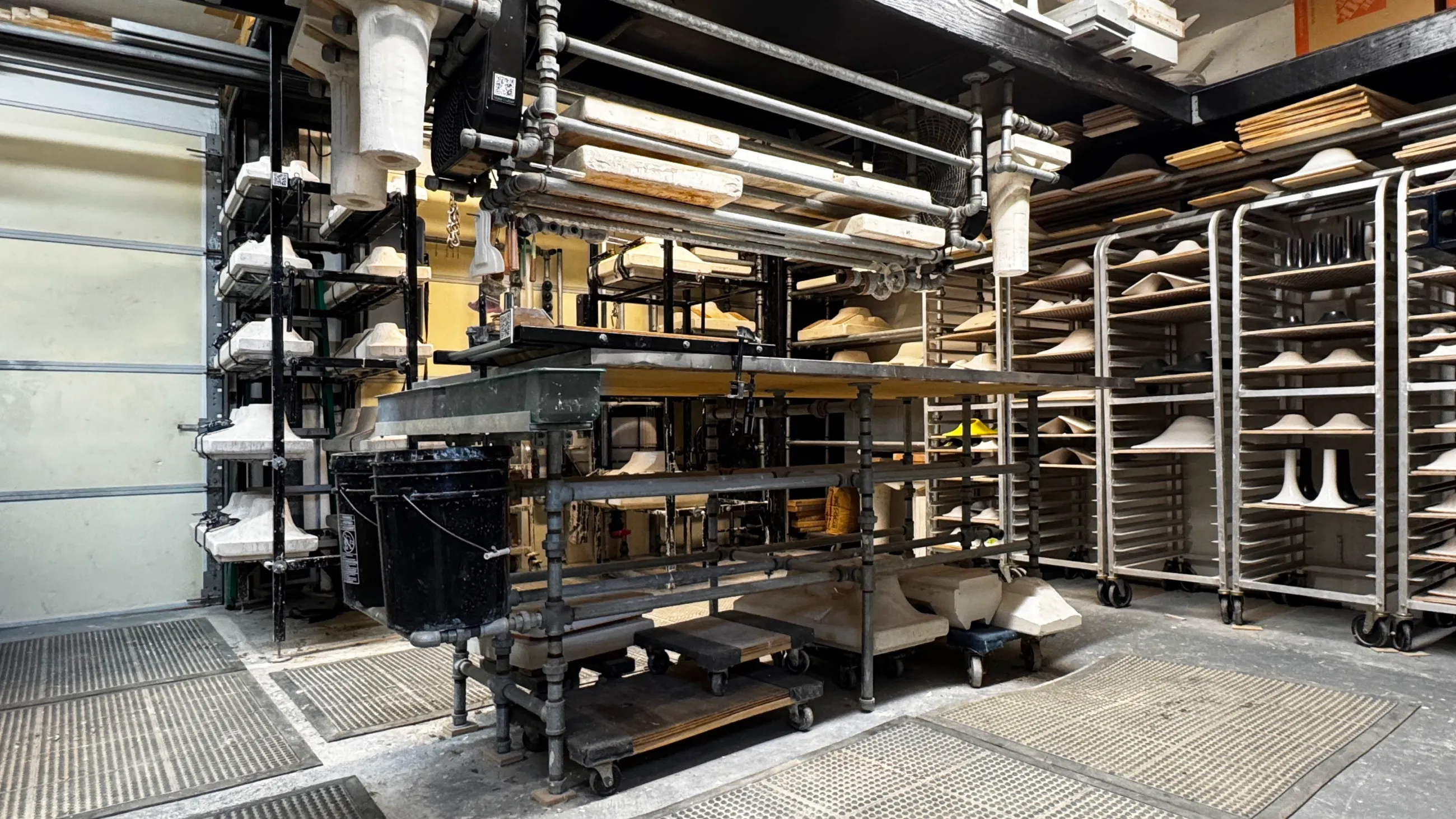
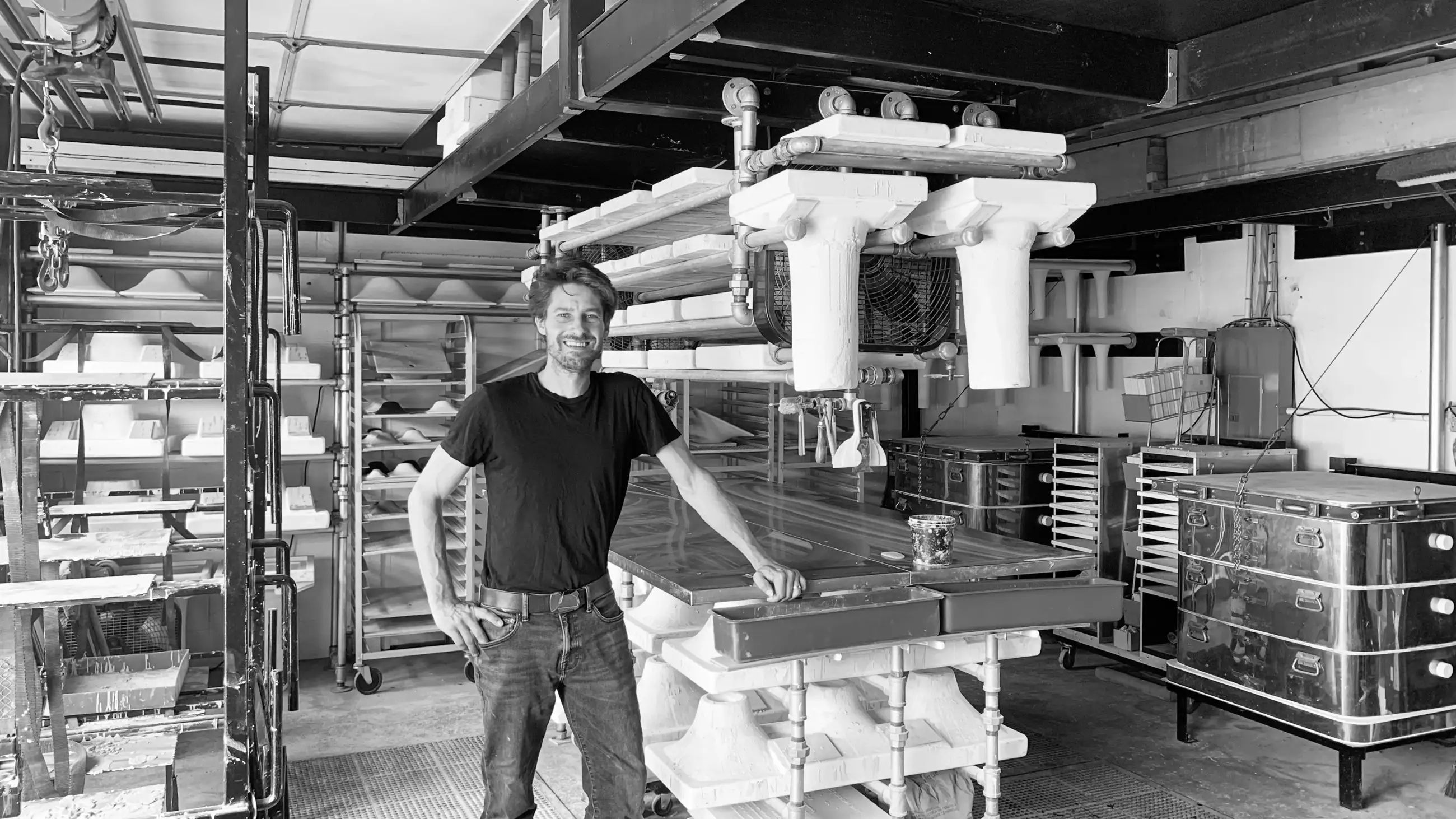
Nearly every table, storage rack, drying shelf, and workstation within the studio is constructed from industrial pipe fittings.
Production environments are never finished. As collections evolve, workflows change, and new equipment is developed, the pipe fitting framework allows every part of the studio to be expanded, reconfigured, or refined without rebuilding from scratch. The production environment remains adaptable because its underlying construction system is adaptable.
Beyond flexibility, the framework has become a design language of its own. Rather than serving only as structure, pipe fittings organize entire workstations into self-contained production environments. Tools, parts, electrical controls, storage, and machine components are integrated directly into the framework, placing everything required for a specific operation within immediate reach.
Nearly every table, storage rack, drying shelf, and workstation within the studio is constructed from industrial pipe fittings.
Production environments are never finished. As collections evolve, workflows change, and new equipment is developed, the pipe fitting framework allows every part of the studio to be expanded, reconfigured, or refined without rebuilding from scratch. The production environment remains adaptable because its underlying construction system is adaptable.
Beyond flexibility, the framework has become a design language of its own. Rather than serving only as structure, pipe fittings organize entire workstations into self-contained production environments. Tools, parts, electrical controls, storage, and machine components are integrated directly into the framework, placing everything required for a specific operation within immediate reach.
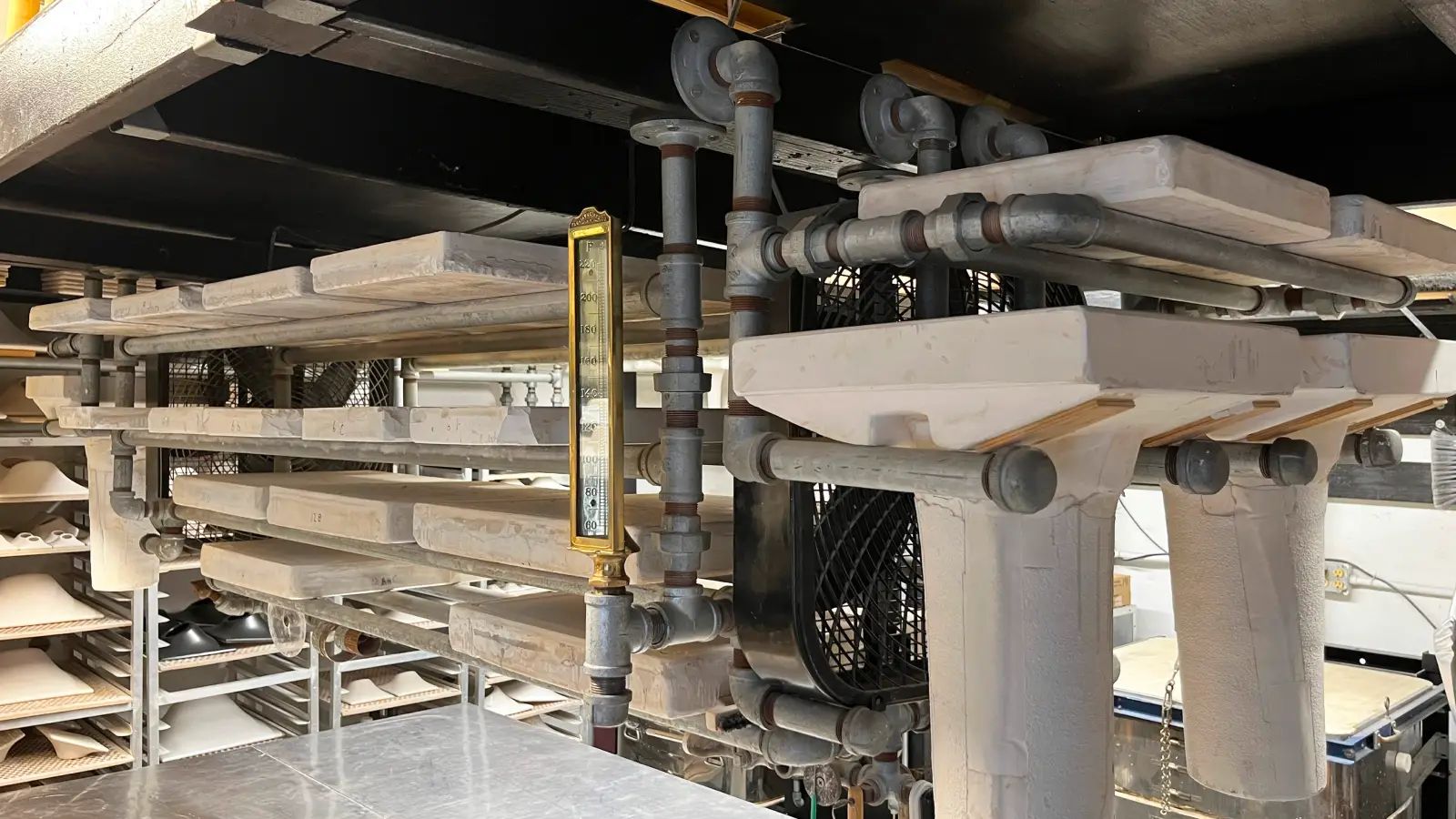
The open framework also serves another purpose. Plaster molds require continuous air circulation while drying, allowing the storage systems themselves to become an active part of the production process.
As the studio evolved, so did the vocabulary within the framework. Industrial pipe fittings become machine frames, drying shelves, hose supports, drill-bit organizers, mounting structures, and storage. Integrated antique switches become machine controls. A reclaimed power plant thermometer monitors studio temperature. Components originally designed for heavy industry are continually reauthored into new purposes while remaining visually connected through a cohesive industrial vernacular.
The same industrial vernacular extends beyond the factory into Pandemic Design Studio's lighting collections, where authentic industrial components continue to serve as both structure and connection. Rather than separating the production environment from the finished work, both evolve from the same material language, creating a studio where products, machinery, and manufacturing systems feel like parts of a single, cohesive body of design.
The open framework also serves another purpose. Plaster molds require continuous air circulation while drying, allowing the storage systems themselves to become an active part of the production process.
As the studio evolved, so did the vocabulary within the framework. Industrial pipe fittings become machine frames, drying shelves, hose supports, drill-bit organizers, mounting structures, and storage. Integrated antique switches become machine controls. A reclaimed power plant thermometer monitors studio temperature. Components originally designed for heavy industry are continually reauthored into new purposes while remaining visually connected through a cohesive industrial vernacular.
The same industrial vernacular extends beyond the factory into Pandemic Design Studio's lighting collections, where authentic industrial components continue to serve as both structure and connection. Rather than separating the production environment from the finished work, both evolve from the same material language, creating a studio where products, machinery, and manufacturing systems feel like parts of a single, cohesive body of design.